

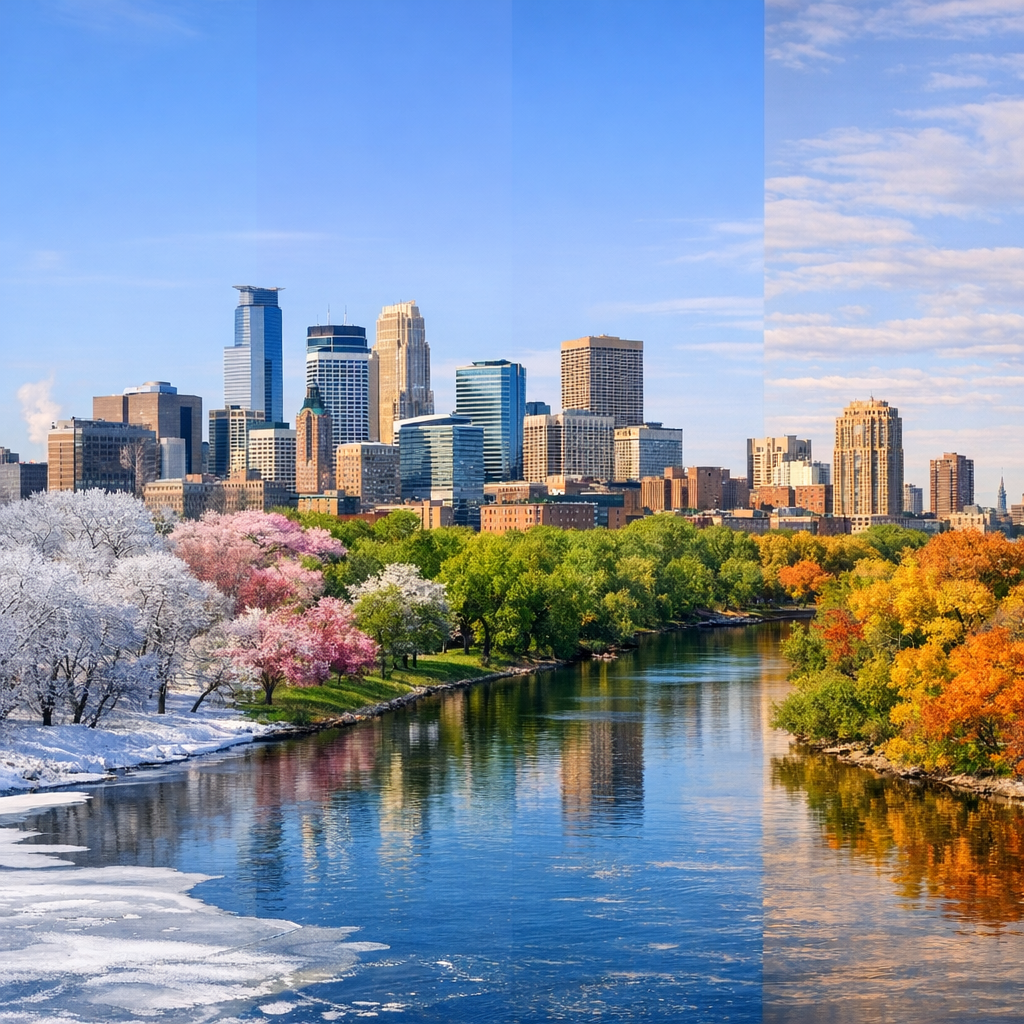
Minneapolis, situated in the Upper Midwest, experiences a humid continental climate characterized by distinct seasonal variations. Understanding these patterns can help residents prepare for and adapt to the changing weather conditions throughout the year.
Seasonal Overview
Winter
Winters in Minneapolis are typically cold and snowy. Average low temperatures in January can drop to around 8°F (-13.3°C), with average highs reaching 23.4°F (-4.8°C). Snowfall is common, contributing to the city’s winter landscape. Residents should be prepared for freezing temperatures and ensure their homes are well-insulated to conserve energy and maintain warmth.
Spring
Spring brings a gradual warming trend. By April, average high temperatures rise to approximately 55.7°F (13.2°C), with lows around 36.1°F (2.3°C). This season often sees increased precipitation, averaging 3.1 inches (78.74 mm) in April. It’s an ideal time for planting gardens and enjoying outdoor activities as the city begins to bloom.
Summer
Summers are warm and can be humid. July, the warmest month, has average highs of 82.8°F (28.2°C) and lows around 64.3°F (17.9°C). Thunderstorms are common during this period, so it’s advisable to stay informed about weather forecasts and take necessary precautions during severe weather events.
Autumn
Autumn features cooler temperatures and vibrant foliage. By October, average highs are around 58°F (14.4°C), with lows near 39.6°F (4.2°C). This season is often less humid and provides comfortable conditions for outdoor activities before the onset of winter.
Environmental Initiatives
The City of Minneapolis is committed to sustainability and environmental stewardship. Initiatives include:
- Zero Waste Plan: Aiming to reduce waste sent to landfills and increase recycling and composting rates. The goal is to achieve 80% recycling and organics recycling by 2030. Residents can participate by utilizing city-provided recycling and composting services. Learn more
- Climate Action: Efforts to reduce greenhouse gas emissions and promote renewable energy sources. The city has set a target to reach net-zero greenhouse gas emissions by 2050. Programs include expanding green jobs, increasing the tree canopy, and supporting electric vehicle infrastructure. Learn more
- City Trees Program: Encouraging residents to plant trees to enhance the urban canopy, improve air quality, and provide shade. The program offers affordable trees for planting on private property. Learn more
By understanding the local climate and participating in these initiatives, residents can contribute to a more sustainable and resilient Minneapolis.