

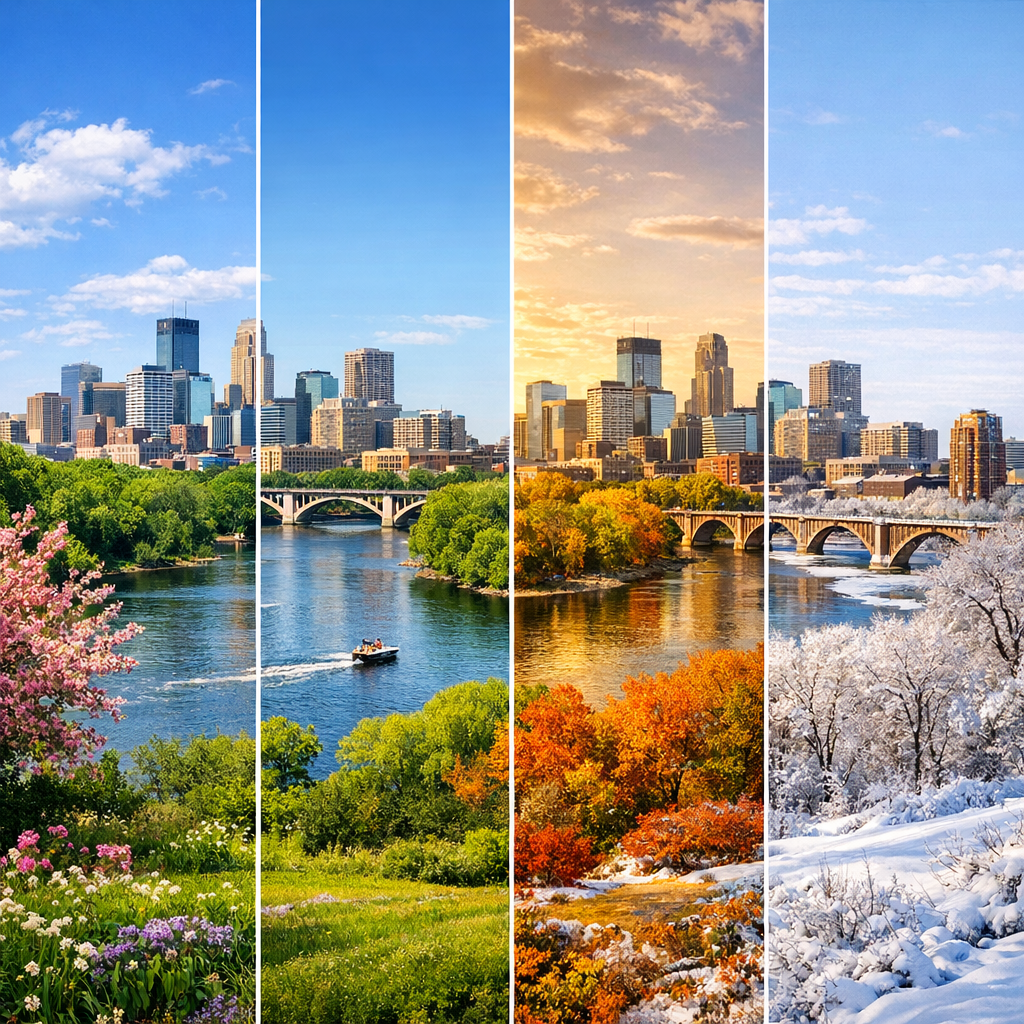
Minneapolis, known for its vibrant culture and picturesque landscapes, experiences a diverse range of weather conditions throughout the year. Understanding these patterns is essential for residents and visitors alike.
Winter: A Snowy Embrace
Winter in Minneapolis typically spans from late November to mid-March. January stands out as the coldest month, with average highs around 23°F (-5°C) and lows dipping to 7°F (-14°C). Snowfall is abundant, averaging between 48 to 55 inches annually, transforming the city into a winter wonderland. Residents often engage in activities like ice skating and snowshoeing during this season.
Spring: A Gradual Thaw
Spring emerges from late March through May, bringing a gradual warming trend. March sees average highs of 40°F (4°C), which rise to 68°F (20°C) by May. This season is marked by melting snow and budding flora, though occasional late snowfalls can occur. It’s a time of renewal, with residents enjoying the blossoming parks and outdoor events.
Summer: Warm and Lively
Summer extends from June to August, characterized by warm temperatures and increased humidity. July is typically the warmest month, with average highs reaching 83°F (28°C). Thunderstorms are common, often bringing brief but intense rainfall. The long daylight hours provide ample opportunity for outdoor festivals, lake activities, and community gatherings.
Autumn: A Colorful Transition
Autumn, from September to November, offers a crisp and colorful transition. September starts with average highs of 72°F (22°C), cooling to 41°F (5°C) by November. The city is adorned with vibrant fall foliage, making it a favorite season for many. It’s also a time for harvest festivals and preparing for the upcoming winter.
Climate Change: A Local Perspective
Recent data indicates that Minneapolis is experiencing noticeable shifts due to climate change. Since 1970, winter temperatures have increased by approximately 5.3°F, more than twice the national average. This warming trend has led to earlier snowmelt, intensified rainfall, and disrupted local ecosystems. The city has responded proactively by implementing the Climate Equity Plan, aiming to significantly reduce climate pollution by 2030 and achieve carbon neutrality by 2050. Initiatives include promoting renewable energy, enhancing public transportation, and supporting green jobs to build a sustainable and resilient community.
Understanding these seasonal patterns and the broader climatic changes is crucial for adapting to and mitigating the impacts of a changing environment in Minneapolis.