

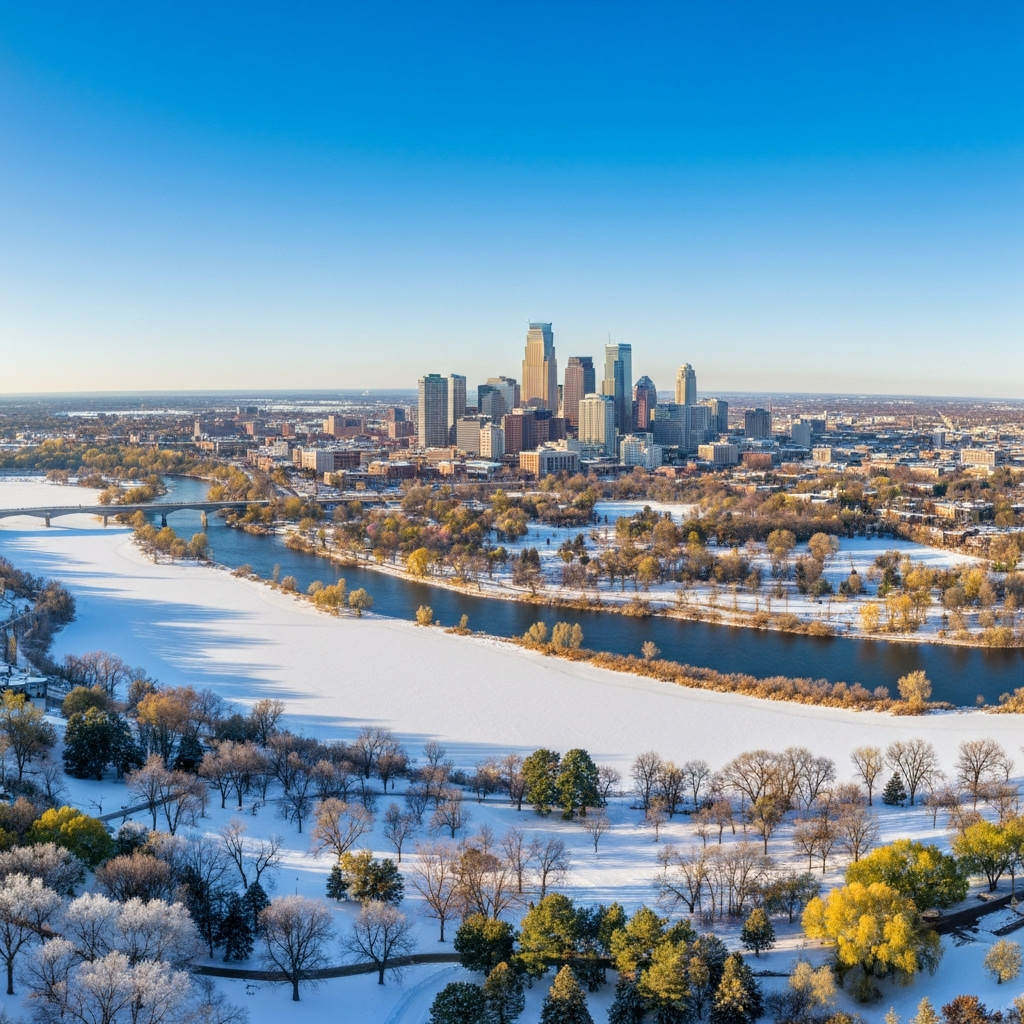
Minneapolis experiences a humid continental climate, characterized by four distinct seasons with significant temperature variations throughout the year. Understanding these patterns can help residents and visitors prepare for the city’s diverse weather conditions.
Winter: December to February
Winters in Minneapolis are notably cold and snowy. Average high temperatures in January, the coldest month, hover around 23°F (-5°C), with lows dipping to 7°F (-14°C). Snowfall is common, contributing to the city’s winter landscape. Residents should be prepared for freezing temperatures and potential snow accumulation during these months.
Spring: March to May
Spring brings a gradual warming trend. By May, average high temperatures reach approximately 68°F (20°C), with lows around 48°F (9°C). This season also sees an increase in rainfall, supporting the blooming of local flora. It’s a transitional period where residents can enjoy milder weather and the reawakening of nature.
Summer: June to August
Summers are warm and humid, with July being the warmest month. Average highs in July are about 83°F (28°C), and lows around 63°F (17°C). This season is ideal for outdoor activities, with longer daylight hours and numerous community events. However, occasional thunderstorms can occur, so it’s advisable to stay updated on weather forecasts.
Autumn: September to November
Autumn features a gradual cooling, with October’s average high around 58°F (14°C) and lows near 41°F (5°C). The season is marked by vibrant fall foliage, making it a picturesque time in the city. It’s a comfortable period before the onset of winter, suitable for various outdoor activities.
Addressing Climate Change
Recognizing the impacts of climate change, Minneapolis has implemented the Climate Equity Plan, aiming to significantly reduce climate pollution by 2030 and achieve carbon neutrality by 2050. This initiative focuses on reducing greenhouse gas emissions and promoting environmental justice, ensuring that all communities benefit from sustainable practices.
By understanding the city’s climate patterns and supporting local environmental initiatives, residents can better prepare for seasonal changes and contribute to a more sustainable Minneapolis.