

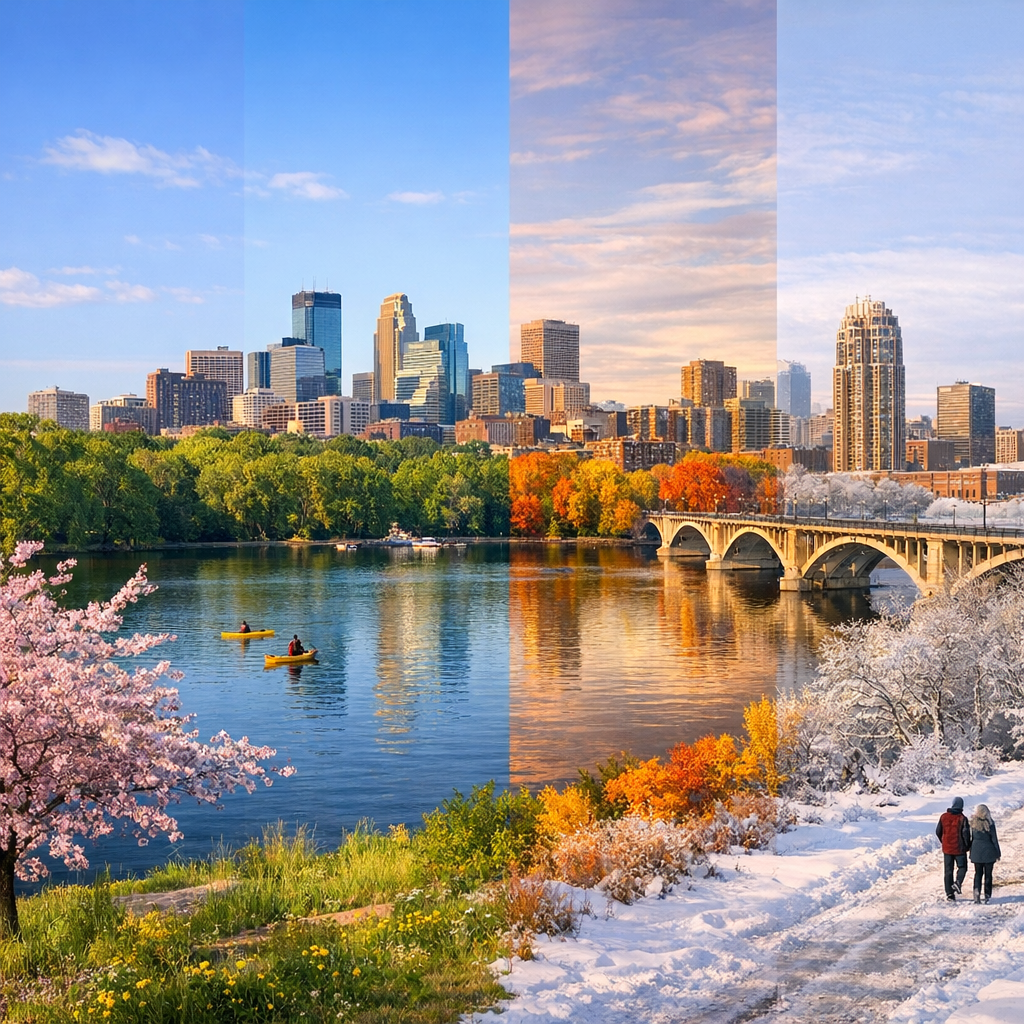
Minneapolis, Minnesota, experiences a classic four-season climate, each bringing its own unique weather patterns and challenges. Understanding these seasonal shifts is essential for residents and visitors alike.
Winter: December to February
Winters in Minneapolis are notably cold and snowy. Average high temperatures hover around 23°F (-5°C) in January, with lows dipping to 7°F (-14°C). Snowfall is common, contributing to the city’s winter landscape. Residents should prepare for icy conditions and ensure their homes and vehicles are winter-ready.
Spring: March to May
Spring brings a gradual warming trend. March sees average highs of 40°F (4°C), increasing to 68°F (20°C) by May. This season is characterized by melting snow and budding flora, though occasional late snowfalls can occur. It’s a time of renewal, with longer daylight hours and milder temperatures.
Summer: June to August
Summers are warm and humid, with July being the warmest month, averaging highs of 83°F (28°C). Thunderstorms are frequent, often providing relief from the heat. The city’s numerous lakes and parks become popular spots for recreation during this season.
Autumn: September to November
Autumn is marked by cooler temperatures and vibrant foliage. September starts with average highs of 72°F (22°C), dropping to 41°F (5°C) by November. It’s a picturesque season, ideal for outdoor activities before the onset of winter.
Impact of Climate Change
Recent data indicates that Minneapolis is experiencing significant climate shifts. Average temperatures have risen by nearly 3°F, and the city is becoming warmer and wetter. These changes have led to more frequent heavy rainstorms, affecting infrastructure and daily life. Additionally, warmer winters threaten traditional activities like ice fishing and snow sports, impacting local culture and tourism.
Understanding these patterns and their implications is crucial for adapting to a changing climate and ensuring the well-being of the Minneapolis community.