

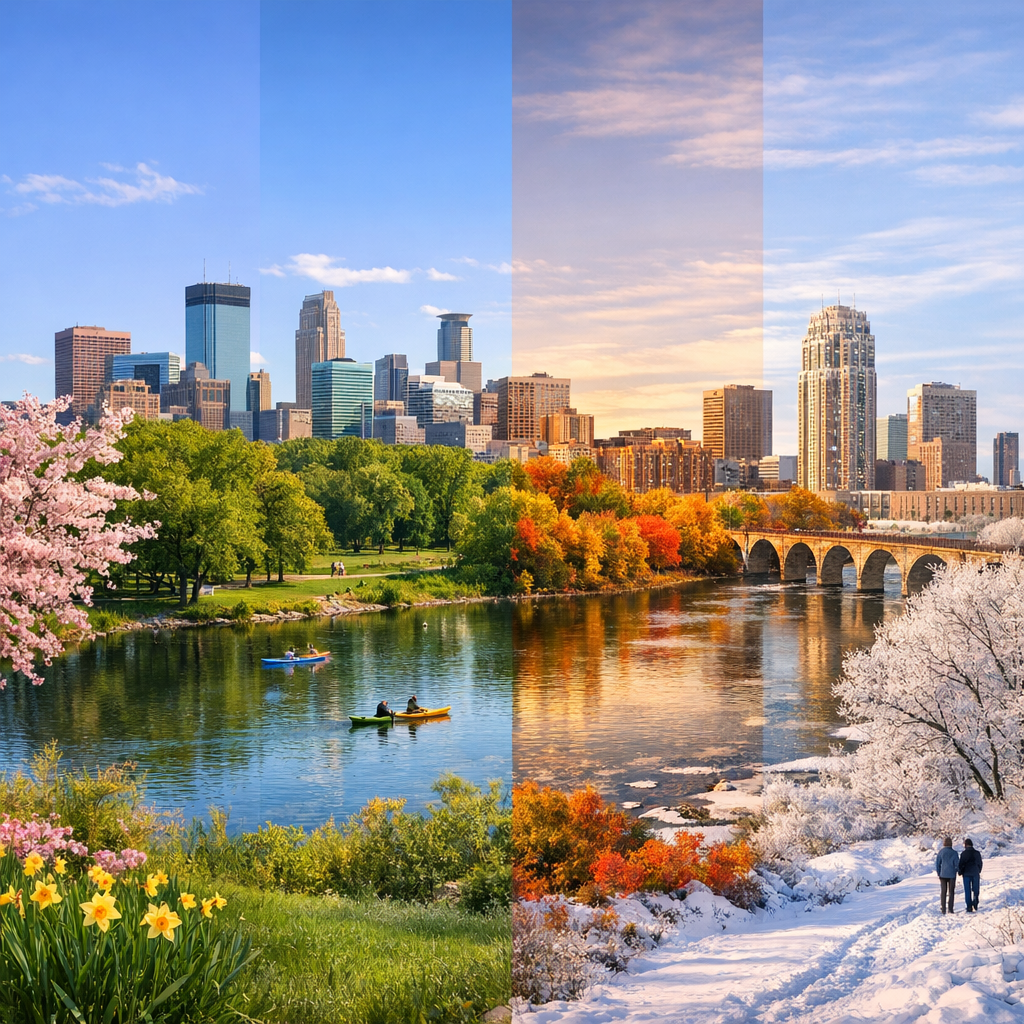
Minneapolis experiences a classic four-season climate, each bringing its own unique characteristics and challenges. Understanding these patterns is essential for residents and visitors alike.
Winter: A Snowy Embrace
From late November to mid-March, Minneapolis transforms into a winter wonderland. January stands as the coldest month, with average highs around 23°F (-5°C) and lows dipping to 7°F (-14°C). Snowfall is abundant, averaging between 48 to 55 inches annually. Arctic air masses can push temperatures well below 0°F (-18°C), accompanied by biting winds that create dangerous wind chill factors.
Spring: A Gradual Thaw
Spring ushers in a gradual warming. March sees average highs of 40°F (4°C), climbing to 68°F (20°C) by May. This season is marked by melting snow and budding flora, though occasional late snowfalls can occur.
Summer: Warm and Lively
Summers are warm and humid, with July being the hottest month, averaging highs of 83°F (28°C) and lows of 65°F (18°C). This season is ideal for outdoor activities, with long daylight hours and numerous festivals.
Autumn: A Colorful Transition
Autumn brings cooler temperatures and vibrant foliage. September averages highs of 72°F (22°C), dropping to 41°F (5°C) by November. It’s a favored time for sightseeing and enjoying the natural beauty of the region.
Climate Change: A Growing Concern
Recent data indicates that Minnesota’s climate is becoming warmer and wetter. Average temperatures have risen by nearly 3°F, and extreme weather events, including heavy rainfall and heatwaves, are becoming more frequent. These changes pose challenges to agriculture, infrastructure, and public health.
In response, the City of Minneapolis has adopted the Climate Equity Plan, aiming to significantly reduce greenhouse gas emissions by 2030 and achieve carbon neutrality by 2050. This plan emphasizes environmental justice, focusing on communities most vulnerable to climate impacts.
Understanding our city’s climate patterns and the ongoing changes is crucial. By staying informed and proactive, we can better prepare for the future and work towards a more sustainable Minneapolis.