

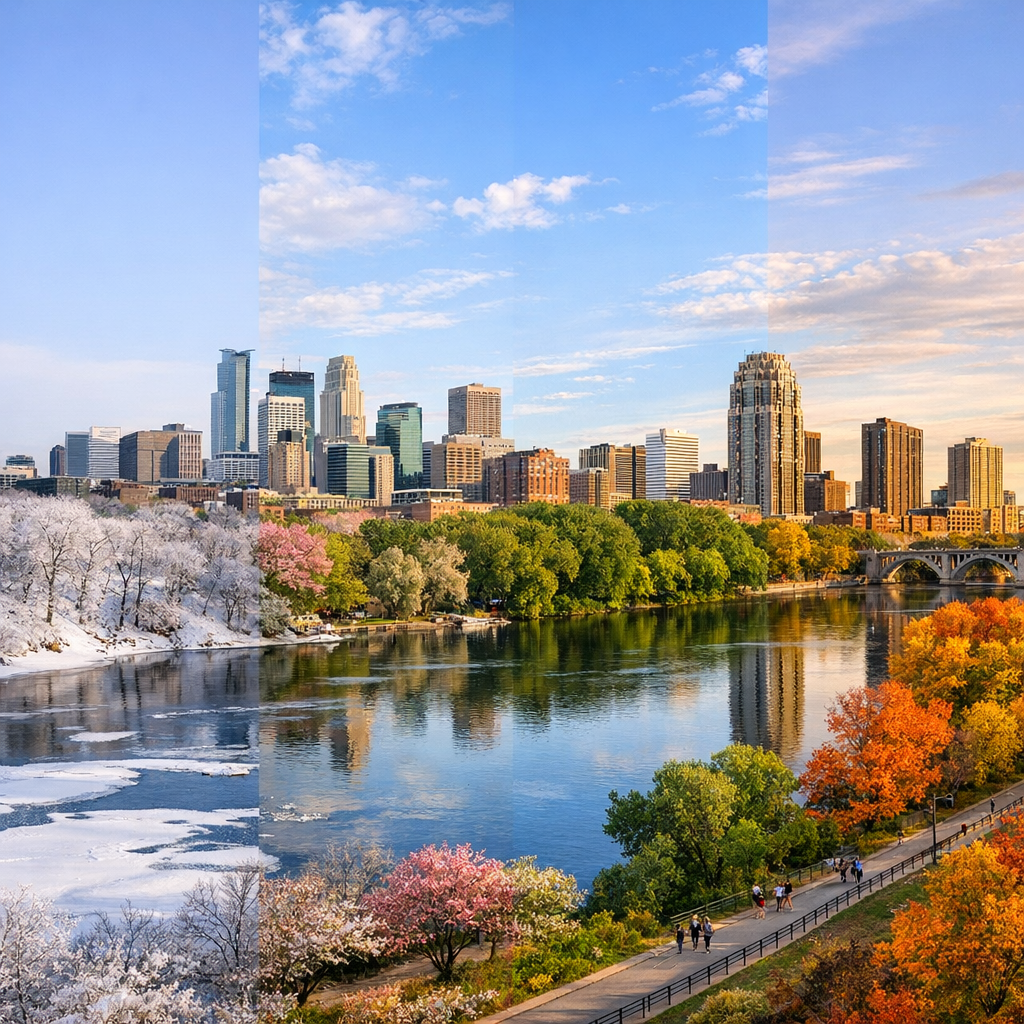
Minneapolis experiences a classic continental climate, characterized by four distinct seasons, each bringing its own unique weather patterns and challenges.
Winter: A Frigid Embrace
From late November to mid-March, Minneapolis endures cold winters. January, the coldest month, sees average highs around 23°F (-5°C) and lows near 7°F (-14°C). Snowfall is common, with annual accumulations averaging between 48 to 55 inches. Residents often face sub-zero temperatures, making winter sports and indoor activities popular during this season.
Spring: A Gradual Thaw
Spring, spanning from March to May, brings a gradual warming. March starts with average highs of 40°F (4°C), reaching up to 68°F (20°C) by May. This season is marked by melting snow, budding trees, and increased rainfall, setting the stage for the lush greenery of summer.
Summer: Warm and Vibrant
Summers in Minneapolis, from June to August, are warm and humid. July, the warmest month, boasts average highs of 83°F (28°C) and lows of 63°F (17°C). The city comes alive with outdoor festivals, lake activities, and bustling farmers’ markets, making the most of the pleasant weather.
Autumn: A Colorful Transition
Autumn, from September to November, offers a crisp and colorful transition. September starts with average highs of 72°F (22°C), cooling to 41°F (5°C) by November. The fall foliage provides a picturesque backdrop, and the cooler temperatures are ideal for hiking and other outdoor pursuits.
Climate Change: A Growing Concern
Recent data indicates that Minneapolis is warming faster than many other U.S. cities. Since 1970, winter temperatures have increased by 5.3°F, more than twice the national average. This warming trend has led to intensified rainfall, earlier snowmelt, and disrupted ecosystems. The city has responded with initiatives like the Climate Equity Plan, aiming to significantly reduce climate pollution by 2030 and achieve carbon neutrality by 2050. These efforts prioritize diverse communities, aiming to reduce utility bills, increase green jobs, and create a healthier future for all residents.
Understanding these seasonal patterns and the impacts of climate change is crucial for residents and visitors alike. By staying informed and engaged, we can all contribute to a more resilient and sustainable Minneapolis.